Physically Embodied Stories: Aged Books
ExhibitionsTime is usually regarded as something from which a painting must be protected: archival grounds, increasingly stable pigments, non-yellowing varnishes – everything is designed to ensure that the artwork remains unchanged. In a culture that places value on what is new, clean and flawless, there is less room for the marks left by time. Yet the artist is more interested in that which carries experience within it. She chooses a different path, allowing her works to age: in selected areas, pigments fade, metals develop a patina, and cracks in the varnish deepen over time.
In her practice, the artist explores the passage of time and the laws of entropy – the constant tension between decay and continuity, in which a whole spectrum of transitional states emerges. At times, rigid structures become constraints, and their inevitable collapse becomes liberating. Yet alongside destruction, the dignified resilience of form and the continuity established by time also emerge. These processes constantly intertwine until time gradually erases the noise of everyday life, leaving behind only what matters most.
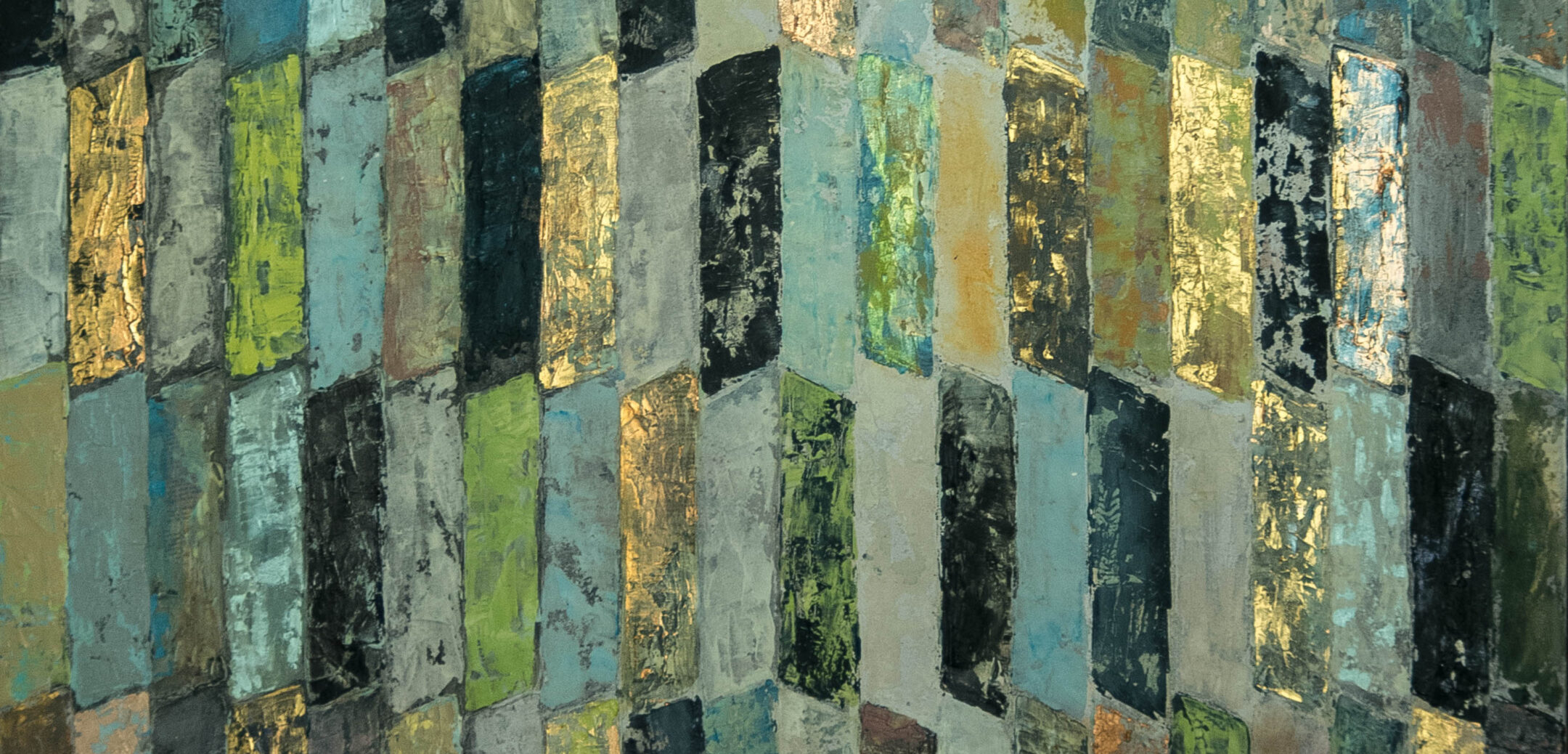
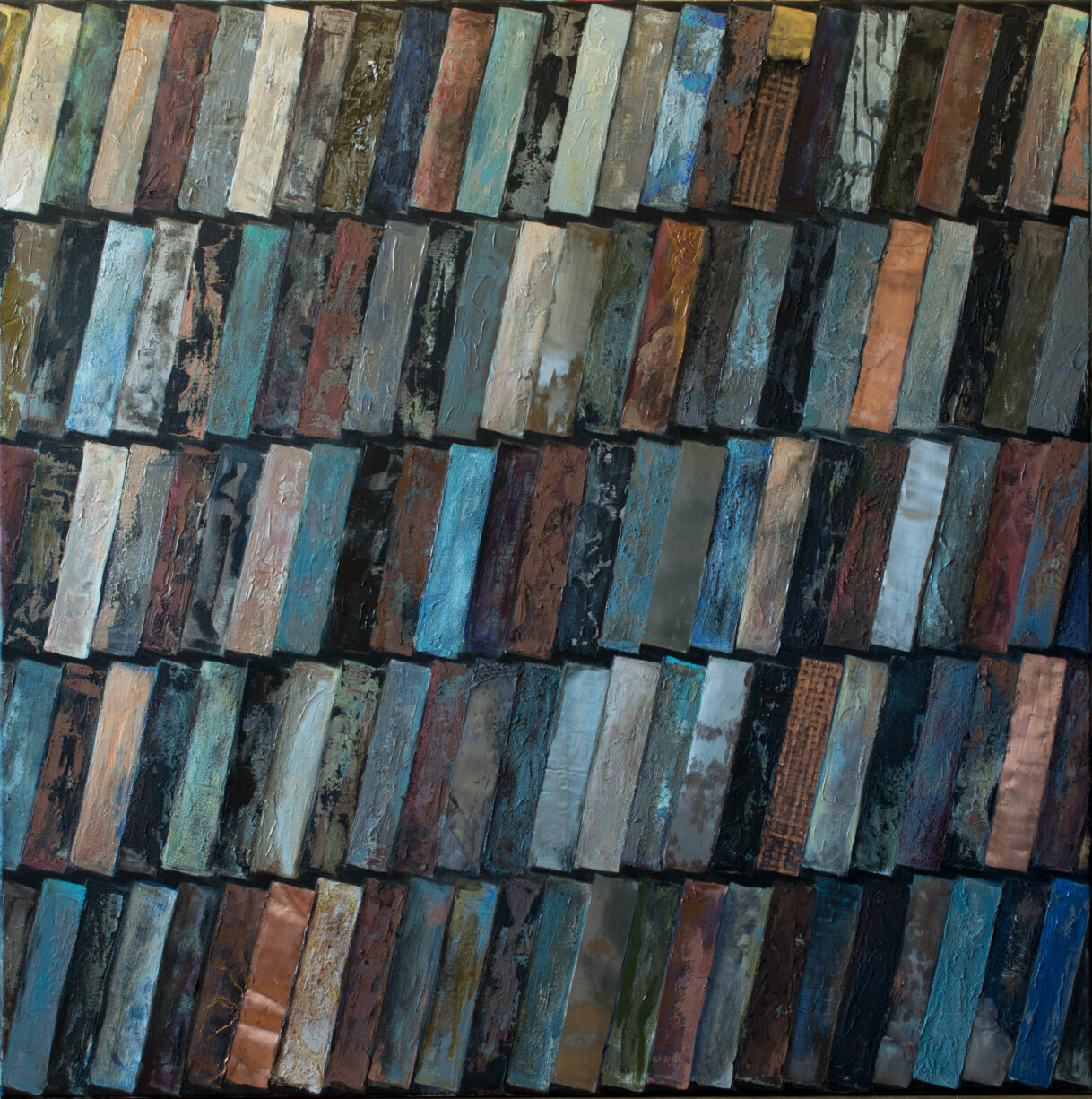
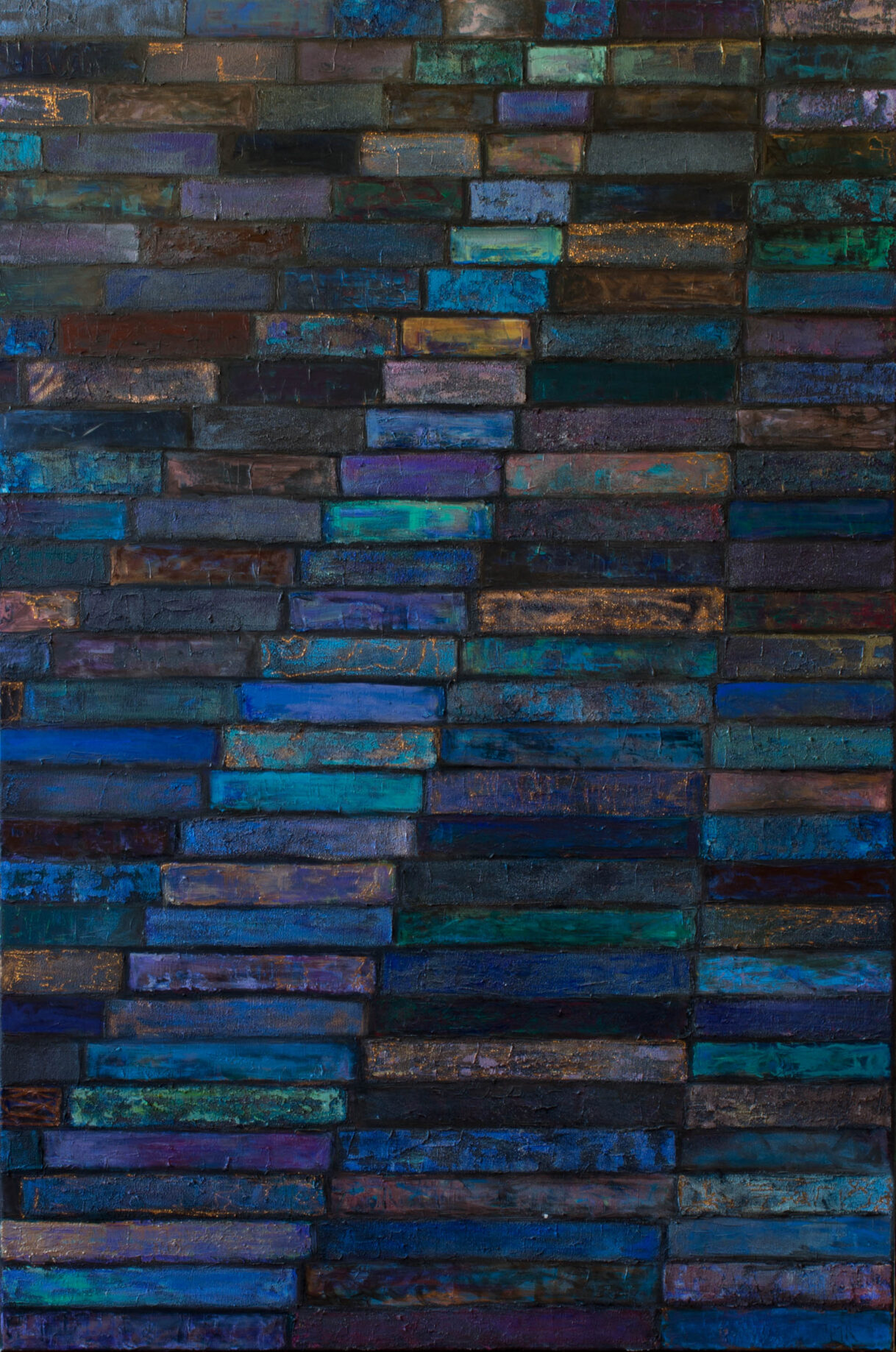
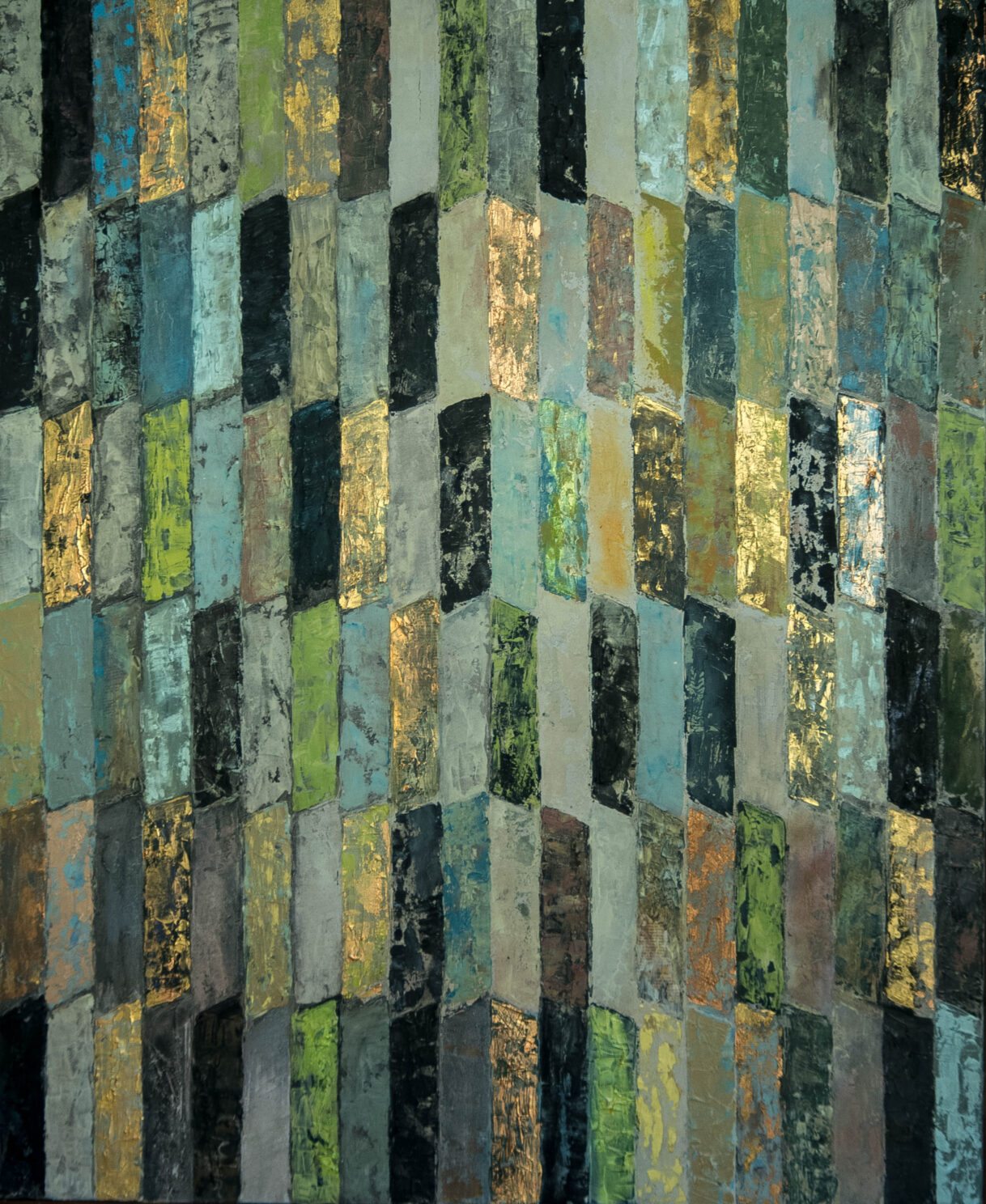
The traces left by time are not defects. They are “physically embodied histories” – a term the artist uses to describe all of her works. She works in mixed media, combining acrylic and oil paints, oxidising pigments, crackle mediums and gold leaf. Her collage elements range from authentic pages salvaged from irreparably damaged books and various metals to natural materials and fragments cut from her own older canvases. In this way, she creates multilayered abstractions characterised by rich texture and a profound sense of surface depth.
PHYSICALLY EMBODIED HISTORIES: BOOKS MARKED BY TIME
Every book carries two histories within it. One is printed on its pages; the other is inscribed in the very body of the book. It can be found in a weathered cover, a note written in pencil by an unknown person in the margin, or stains on yellowed paper. This second history cannot be found in any other copy from the publisher’s print run – it is unique and belongs only to that particular volume.
The comparison between a human being and a book is not accidental. This parallel is naturally embedded in language: we try to “read” one another, see some people as “open” books and others as “closed” ones, learn to understand people “between the lines”, or observe what is “written on their faces”. Yet both in art and in human life, the marks left by time are most often perceived as flaws. Paintings are preserved so that they may remain untouched by time. The same is often expected of people: that the experiences they have lived through should leave no visible mark.
This series, however, suggests otherwise: the marks left by time are not only beautiful, but dignified. They reveal not damage, but experience – both scars and laughter lines. Not all of them are visible at first glance.
In the artist’s canvases, the book becomes an abstract quadrilateral form: a spine, a block of a bookshelf, or an individual page. Throughout the series, this quadrilateral motif takes on a different meaning each time. In one work, it becomes a foundation upon which knowledge accumulates unevenly; in another, the gradually shifting framework of an illusion of order; elsewhere, a wall of foreign narratives from whose depths faces emerge, or a personal archive in which stories are still being written.
In every case, however, in order to read the true, hidden story, the viewer must come close to the work.