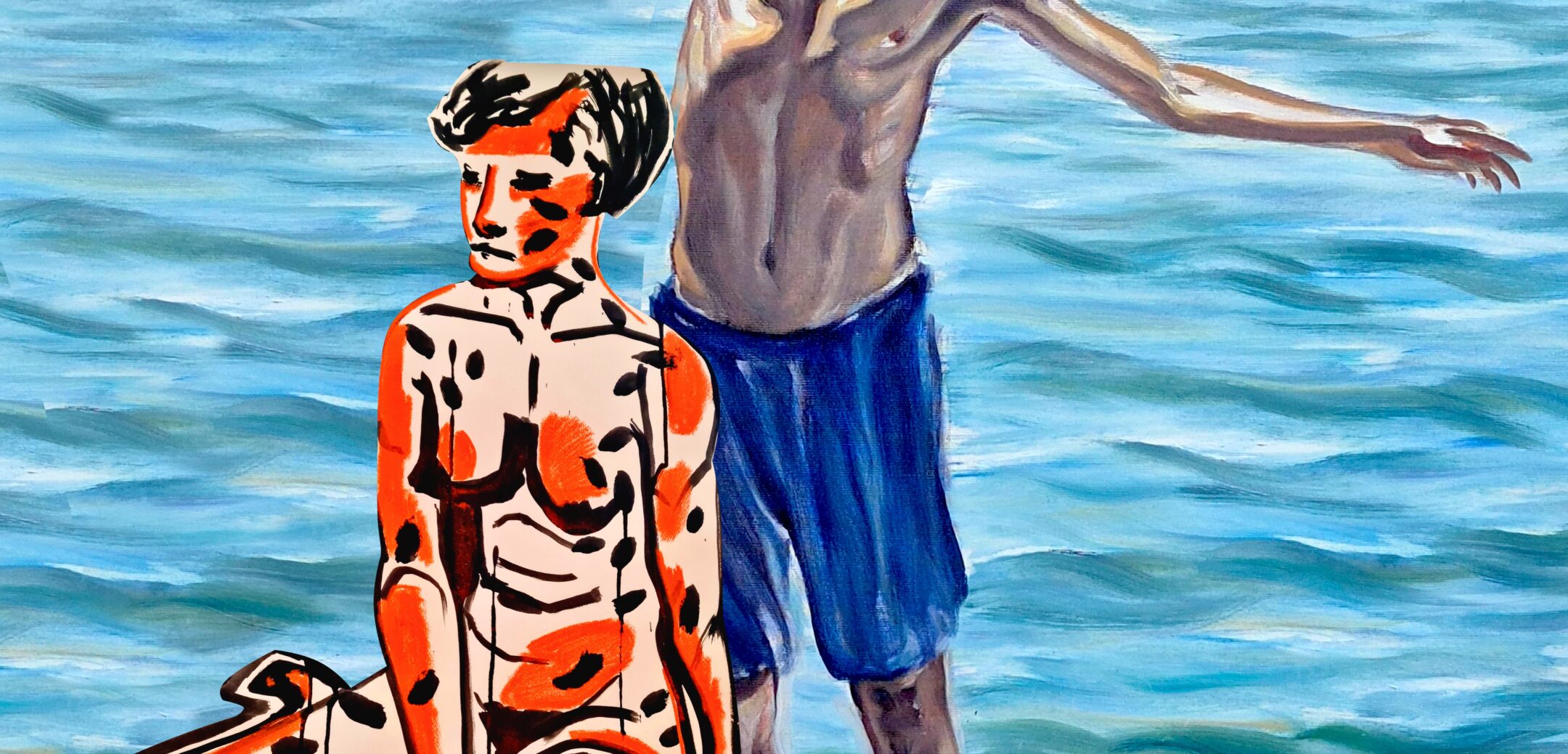
“AFTER PICASSO” / 26
ExhibitionsPicasso – this is the signature of one of the most prominent artists in the world, who will not be confused with anyone else! Even the person most distant from art, who has deeply studied the great pages of art history in his memory, knows that there was such an artist who was not afraid to boldly experiment with art genres, to search for and discover something unexpected, distant from the existing norms of art – the pioneer of modernist and cubist art styles – the wonderful Pablo Picasso!
The same bold, innovative and new approach to the modernist art school and the fusion of styles is also found in the new exhibition of two Lithuanian artists, Julija Tumelytė and Paulius Juška, “After Picasso”.
The manifesto “After Picasso” is a love for Modernism and the line of extraordinary beauty, a sympathy for the masterpieces of the French art school, the influence of the modernist style in the contemporary work of Lithuanian authors and a unique interpretation of color, line and theme, its transformation, in search of an exceptional connection, where the classic meets the modern and in this experiment something extraordinary, unexpected, as if never seen before is born. This is not only a journey through time, remembering the best creators in the history of art, such as Pablo Picasso or Michelangelo, it is a bold challenge without fear of a new approach to the visuality of Lithuanian art and today’s creators, who, due to the most wonderful inspirations of the heart, travel thousands of kilometers there and back to find the best visual inspirations, awaken the imagination and constantly strive for high mastery in their works of art. This is even just a boundary between what has already been – it is a new boundary between what is yet to come.
This amazing journey of artistic expression from one art style to another is a personal creative transformation, presented in canvases, drawings, installations, unexpectedly combining realism and modernism in one EXHIBITION.
JULIJA TUMELYTĖ, who graduated from the Vilnius Academy of Arts in 2011 with a master’s degree in monumental art, after her art studies she chose bright colored drawing in her work and actively creates modernist colorful painting. Through artistic experimentation and unexpected interpretation, Julija creates a new, unique, mutual dialogue with her favorite modernist creators, searches for an original artistic language, a connection with the threads of impressionism, fauvism, expressionism and her favorite Grands of the modernist art school: Pablo Picasso, Henri Matisse, Claude Monet, Paul Cézanne, Marcel Duchamp and others. In 2019, the Artist goes to the South of France and settles in the city of Cassis, near Marseille, next to the “Parc National des Calanques” national park.
Julia lives and works in Cassis, where every day her eyes see the colors of the southern color and nature of extraordinary beauty, typical of the Mediterranean region. The pointed steep cliffs, the emerald sea and southern plants fascinate the author and in turn form a new transformation of the artist, looking back to the best modernist creators of all time, who, equally driven by artistic inspiration, traveled to the South of France and other Mediterranean countries to paint.
PAULIUS JUŠKA – already a well-known follower of the Lithuanian academic school and a Master of academic-anatomical drawing, who in 1999 graduated from the Vilnius Academy of Arts with a bachelor’s and master’s degree in fresco-mosaic. Since his studies, he has constantly deepened his skills in performing classical drawing and rather followed in the footsteps of the traditional Italian Renaissance school, striving in his work and drawings for Michelangelo-level mastery and detail, anatomical perfection.
In the summer of 2026, the artists travel to the Mediterranean region together. Driven by artistic quests, the artists travel to Greece, settle in the city of Kavala, and travel around its surroundings. The southern experience draws new boundaries of interdisciplinary and intercultural art in their minds and encourages them to experiment with new themes encountered during their travels: rocky coastal landscapes, unseen faces of people, different cities and countries, favorite architectural styles, exotic plants, and brightly colored motifs accompany them throughout their Mediterranean journey.
The “monumentalist artist” begins a new work with a clear, regular drawing, but Julia breaks this dogma, playfully transforming it. Three-dimensional objects in the artist’s work turn into a two-dimensional image, the form is flattened, purified, turned into color or even a stain. A clearly recognizable object changes and acquires new layers of perception, conceptual volumes of the object, and modernist style contours. Paulius, with the careful gaze of an artist observer, captures unseen themes of Mediterranean landscapes and explores the perspectives of converging streets characteristic of mountain towns, unexpected mise-en-scènes of the mountainous landscape, the labyrinths of streets common in Mediterranean cities, rising and falling buildings, as if the most beautiful views of the Mediterranean Sea are emerging from around the bend, steep cliffs and shades of emerald blue.
Everything is like a good southern film, where each newly discovered image is like a new taste, captivating again and again, inspiring improvement, creating new and different pages of art history here, in Lithuania, and while traveling abroad, telling people you meet about Lithuania. The desire to make a mark in the history of art, to transform and change, to be better than it was before and after Picasso.
The desire to look for your best drawing and travel thousands of kilometers to find the best sources of inspiration, the best perspective, the best shot of the trip – and this unites these two authors. And after everything, as after a long wonderful journey, on paper, in history or on canvas, only the signature remains.
The signature, like Picasso, forever immortalized in a moment and recorded in memory. “I remain only black ink on white paper, on my canvas, on my drawing – I am only my own signature in time and space: Juliette, PJ, Picasso.”